
Diet breaks and refeeds: pausing a cut on purpose
An evidence-based guide to stepping off the deficit on purpose. A diet break is a planned week or two back at maintenance. A refeed is a short, higher-carbohydrate day or two. This covers what they are, why a long cut fights back (metabolic adaptation, NEAT and diet fatigue), what the research (including the MATADOR study) actually shows, who they suit, how to run them without undoing progress, and the honest limits: they aid sustainability far more than they deliver any magical "metabolic reset."
Here's the whole idea in one sentence: a planned pause at maintenance, or a short higher-carb day, can make a long fat-loss phase more sustainable, easing diet fatigue, restoring some training capacity, and possibly helping protect muscle. It works mainly by helping you keep going. There's no "resetting" of a broken metabolism involved. Everything below is the detail behind that: what the studies found, and how to use these tools well rather than as an excuse.
On this page
A framing note before the detail. This is a well-studied area, but the findings are genuinely mixed and the people in the studies differ: some trials used men with obesity, others lean resistance-trained lifters, and the tightly controlled research provided the food. So this is written as can, tends to and around, never as a guarantee, and every figure is a population-level guide from published research rather than a personal prescription. It's general education rather than medical or dietary advice, and it isn't a personalised plan. If any of this touches a history of disordered eating, please read it with that in mind and lean on a professional.
What diet breaks and refeeds actually are
Both are deliberate, scheduled pauses in a fat-loss deficit: planned steps that are part of the plan, rather than a lapse or a "cheat day." They differ mostly in dose and duration.
- A diet break is the bigger dose: a planned stretch, commonly one to two weeks, where you raise intake up to roughly maintenance and step out of the deficit entirely. You're not trying to lose fat that week. You're trying to hold weight, feel human again, and let accumulated fatigue clear before you resume the cut.
- A refeed is the smaller dose: a short window, usually one to three days, often a day or two within a dieting week, where you raise intake (mostly from carbohydrate) toward or to maintenance while your weekly total still lands in a deficit. Think of it as a nudge rather than a full stop.
The plain-English distinction: a diet break pauses the deficit. A refeed keeps the deficit but lifts intake briefly. Both stand in contrast to a continuous deficit, where you simply eat below maintenance every day until you reach your goal. This guide is about when interrupting that continuous grind on purpose is worth it, and when it isn't. If you're still getting the underlying deficit right, start with the fat-loss fundamentals guide. This one assumes you already have a cut running and are wondering whether to pause it.
Why a long cut fights back
To see why anyone bothers, you have to understand what a prolonged deficit does to the body. Fat loss is simple in principle (eat less energy than you burn), but the body doesn't sit still while you do it. Two forces build up over a long cut, one physiological and one psychological, and diet breaks and refeeds are aimed at both.
The physiological force is metabolic adaptation (also called adaptive thermogenesis): a drop in energy expenditure that goes beyond what your smaller body should cost to run. The position stand of the International Society of Sports Nutrition (ISSN, a United States-based society with international membership) describes it as a 10–15% drop in total daily energy expenditure beyond what is predicted by the losses in lean and fat mass.[1] Several things drive it. Levels of leptin (a hormone your fat cells release that signals "we have plenty") track both short-term energy intake and how much fat you carry, so they fall as you diet, and the brain reads that as a reason to conserve.[2] And NEAT (non-exercise activity thermogenesis: all the fidgeting, pacing, standing and incidental movement you do without thinking) declines with an energy deficit, so you burn less across the day without noticing you've slowed down.[2] Hunger drifts the other way. None of this is a malfunction. It's your body defending its energy stores exactly as evolution built it to.
The psychological force is plainer: diet fatigue. Weeks of hunger, restriction, saying no, flatter training and the mental load of tracking wear people down. That's not weakness. It's the normal cost of a long deficit, and it's usually what breaks a diet long before physiology does. The ISSN puts compliance at the centre of the whole thing: the long-term success of a diet, its position stand says, depends on compliance and on suppressing or circumventing mitigating factors such as adaptive thermogenesis.[1] In other words, the best diet is the one you can actually keep doing, and that's precisely the lever a break is trying to pull.
The evidence: does pausing help?
This is where honesty matters, because the popular story ("diet breaks torch more fat!") is more confident than the science. Here's what the better studies actually found.
The headline is the MATADOR study (Byrne and colleagues, 2018). Fifty-one men with obesity were randomised and 47 began the intervention, eating at 67% of weight-maintenance requirements during restriction (a roughly one-third deficit). One group dieted continuously for 16 weeks. The other dieted intermittently, alternating two-week blocks of restriction with two-week blocks back at energy balance, which stretched their programme to about 30 weeks in calendar time but kept the same 16 weeks of actual restriction. Among the 36 who completed per protocol, the intermittent group lost more fat (about 12.3 kg versus 8.0 kg) and, once changes in body composition were accounted for, their resting energy expenditure fell less, suggesting the maintenance blocks blunted some of the adaptive slowdown. Importantly, mean weight change across those seven maintenance blocks was 0.0 kg: the breaks didn't cost them their progress.[3]
That's a striking result, and it's the strongest single piece of evidence for the idea. But read the fine print before you generalise it: it was done in men with obesity, under tightly controlled provided-food conditions, and it took nearly twice as long in real time to lose that fat.[3] The wider literature is far less tidy. The ISSN's position stand puts it bluntly: the collective body of intermittent calorie-restriction research demonstrates no significant advantage over daily calorie restriction for improving body composition.[1] And when the same question was asked of trained people: the ICECAP trial, 61 resistance-trained adults running either 12 straight weeks of moderate restriction or four three-week blocks with a one-week break at energy balance between them, there was no difference between the groups in fat mass, fat-free mass or resting energy expenditure.[5] So MATADOR is a genuine, well-run signal that can favour breaks. It isn't proof that breaks beat continuous dieting for everyone.
On refeeds specifically, the most cited trial is Campbell and colleagues (2020). 27 resistance-trained men and women ran a prescribed 25% deficit for 7 weeks, eating 1.8 g of protein per kg of body mass and lifting four days a week. One group ate two consecutive higher-carbohydrate days at maintenance each week. The other dieted continuously. Fat loss was similar between groups, and the refeed group lost less fat-free mass on paper (about 0.4 kg versus 1.3 kg) and less resting metabolic rate, about 38 versus 78 kcal/day.[6] Here is the honest part, though. A published reanalysis showed those were within-group changes, and that the only outcome differing significantly between the groups was "dry" fat-free mass: the protein-and-mineral fraction, with water removed. Total fat-free mass and resting metabolic rate did not differ between treatments.[7] The original authors accepted the point and published a revised conclusion saying exactly that.[8] Treat refeeds as plausible and worth trying, then, rather than as a demonstrated way to keep muscle.
What they do (and don't)
Pulling the evidence together, here's the honest ledger. Diet breaks and refeeds can plausibly help by:
- Improving adherence. This is the strongest benefit by far. A scheduled break gives you something to aim at, relieves diet fatigue, and makes a long deficit psychologically survivable, and the ISSN's position stand puts long-term compliance at the centre of whether a diet works.[1]
- Partly easing the adaptive slowdown. Three days of carbohydrate overfeeding raised plasma leptin by 28% in controlled work on lean women, so eating more, and particularly more carbohydrate, does move the signal.[9] And in MATADOR, the maintenance blocks blunted some of the fall in resting energy expenditure.[3] The effect is partial and temporary, but it's real. On the other side, spontaneous daily movement can stay suppressed for a while even after people go back to eating freely, so don't count on NEAT bouncing straight back.[2]
- Possibly helping protect muscle, especially in leaner, training people. Leaner individuals lose body protein two to three times faster than heavier ones during energy restriction, so they have the most to gain.[10] The refeed trial pointed that way, though only dry fat-free mass separated the groups on reanalysis.[6][7] What is better established is rate: elite athletes losing about 0.7% of body weight a week gained lean mass, while those losing 1.4% a week did not.[11]
- Restoring training and mood. In the ICECAP athletes, a single one-week diet break at energy balance significantly increased the work their quadriceps and hamstrings could complete, and they reported less hunger and irritability along with more fullness, satisfaction and alertness. Maximal strength did not change.[12]
And here's what they don't do, said plainly. They don't "reset" or "boost" your metabolism in any lasting way: there's no broken metabolism to fix and no switch to flip. A break relieves pressure for a while, then the deficit's effects return when the deficit does. They don't reliably speed up fat loss on their own: across the intermittent-restriction literature there is no significant body-composition advantage over daily restriction,[1] and pausing the deficit by definition pauses fat loss for that stretch. And they're not mandatory: many people finish a moderate cut perfectly well without a single break. These are tools for sustainability rather than shortcuts.
Who they suit (and who doesn't need them)
These tools earn their place most when the diet is long, aggressive, or being done by someone already lean, the situations where fatigue and muscle loss are biggest. Consider a break or regular refeeds if:
- You've been in a deficit for a couple of months or more and it's starting to grind.
- You're already fairly lean and want to protect muscle: leaner dieters lose body protein two to three times faster than heavier ones, and preserving lean mass is genuinely hard for very lean athletes even with intense resistance training.[10]
- The classic diet-fatigue signs are stacking up: relentless hunger and irritability, flat training,[12] and, where energy availability has fallen far enough, menstrual changes, since luteinising-hormone pulsatility is disrupted below roughly 30 kcal per kg of lean mass per day.[13]
- You're training hard and your performance is visibly suffering: carbohydrate shortfalls drain muscle glycogen, and the fatigue that follows is a fuel problem more than a motivation one.[14]
You probably don't need them if you have only a little to lose and a few weeks to go, your deficit is mild, and you feel fine: adding breaks there just slows a short, comfortable job. And a real caution: if you have a history of disordered eating, higher-intake days can be psychologically fraught. A review of nutrition for physique athletes notes the high prevalence of binge-eating episodes and disordered eating in that group, and argues that unstructured "cheat" meals or days may be contraindicated in many cases, one reason a refeed is defined in advance rather than declared on the day.[15] In that situation these are best handled with a qualified professional rather than self-prescribed from an article.
How to run a diet break
The whole point of a diet break is that it's controlled: a maintenance week rather than a week off the rails. A few principles keep it from undoing anything:
- Go to maintenance, staying out of a surplus. Raise intake back to roughly your maintenance calories: the amount that holds your current weight. In the ICECAP protocol the break calories came from added carbohydrate.[12] Keep protein steady and high: adequate protein alongside resistance training is what limits the lean mass you lose across a deficit.[2] The goal is to hold weight rather than gain it, so you eat enough without eating as much as possible.
- Keep it a real length, and keep it planned. One to two weeks is what the trials used: two weeks at energy balance in MATADOR,[3] one week in ICECAP[5], and a review of intermittent dieting for athletes suggests at least seven to fourteen days at energy balance is needed to reverse some of the adaptations to restriction.[10] Decide the length up front and put an end date on it: an open-ended "I'll eat more for a while" is how a break quietly becomes a rebound.
- Keep training and keep tracking. Don't stop lifting: in ICECAP, leg muscle endurance improved measurably across a one-week break.[12] And keep logging, so you can confirm weight is holding flat rather than climbing.
- Expect the scale to jump, and don't panic. Eating more refills the gut and muscle glycogen, and each gram of glycogen is stored with at least 3 g of water, so you'll often see a kilo or two appear within days.[14] That's not fat. It comes back off within days of resuming the deficit.
- Time it sensibly. There's no established interval, and no trial has compared different spacings head to head: the studied rhythms are two weeks on, two weeks off[3] and three weeks on, one week off.[5] Take one sooner if the cut has been long or hard or you're very lean, later if it's been mild. You can also take one around a genuinely busy or social week, so the break does double duty.
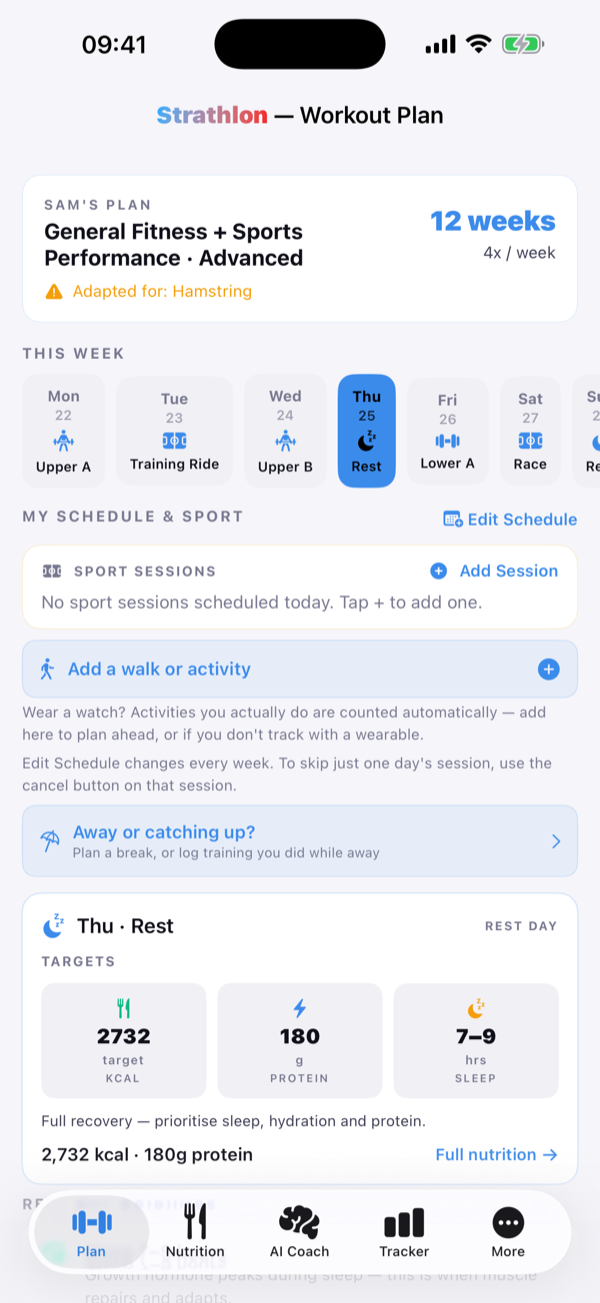
When the break ends, simply return to your previous deficit and carry on. For the mechanics of setting a maintenance target and not sliding past it, the maintenance-nutrition guide goes deep on what "eating at maintenance" really means and how to hold it.
How to run a refeed
A refeed is the lighter-touch version, for when a full break isn't warranted but you want relief within a dieting week. The usual approach:
- Raise intake toward maintenance for a day or two, mostly by adding carbohydrate, the macronutrient that refills glycogen[14] and the one that moves leptin, since carbohydrate overfeeding raises it while fat overfeeding does not.[9] Keep protein steady. Keep fat moderate so the extra energy comes chiefly from carbs. The trial protocol ran two consecutive days at maintenance calories.[6]
- Keep the week in deficit. A refeed lifts one or two days out of seven, while the rest of the week stays restricted: in the Campbell protocol two maintenance days sat alongside five restricted ones, and the week still averaged a deficit of about a quarter.[6] Your seven-day total should still land below maintenance, or you've simply stopped dieting without meaning to.
- Anchor it to hard training. Placing a refeed on your heaviest training day means the extra carbohydrate goes toward fuelling and refilling the muscle you just worked, the day it's most useful.[14]
- Use it as a pressure valve. Some people run a refeed day or two every week of a long cut. Others deploy one only when hunger, training and mood dip. Both are reasonable: the common thread is that it's planned rather than a reaction to a bad day.
Think of refeeds and breaks as the same idea at different doses: a refeed is a short exhale within the week. A diet break is a longer one between blocks. Neither replaces getting the overall deficit and protein right in the first place: the eating-for-results guide covers that foundation, and these tools sit on top of it.
Common questions
What is the difference between a diet break and a refeed?
A diet break is a planned, longer pause, usually one to two weeks, where you eat back up to roughly maintenance calories and step out of the deficit entirely. A refeed is much shorter, typically one to three days, often just a day or two a week, where you raise intake (mostly from carbohydrate) toward or to maintenance while staying in an overall deficit across the week. Put simply, a diet break pauses the deficit. A refeed nudges it up briefly without stopping it. Both are deliberate, scheduled tools. Neither is an excuse to abandon the plan.
Do diet breaks actually help you lose more fat?
Sometimes, but the evidence is mixed and the mechanism is mostly indirect. In the tightly controlled MATADOR trial, men with obesity who alternated two-week blocks of restriction with two-week blocks at maintenance lost more fat (about 12.3 kg versus 8.0 kg) than a continuous-deficit group with the same number of deficit weeks, and their resting metabolism fell less once body-composition change was accounted for.[3] But that study took far longer in calendar time and used provided food, a later trial in resistance-trained adults that inserted a one-week break after every three weeks of dieting found no difference in fat mass, fat-free mass or resting energy expenditure,[5] and the International Society of Sports Nutrition's review of intermittent versus daily calorie restriction concluded there is no significant advantage for body composition on average.[1] The most reliable benefit is that breaks help many people keep going, and compliance, over months, is what actually determines the result.[1]
Do refeeds or diet breaks reset your metabolism?
No: that framing oversells it. Prolonged dieting does cause a real but modest slowdown called adaptive thermogenesis, which the International Society of Sports Nutrition describes as roughly a 10–15% drop in total daily energy expenditure beyond what the loss of fat and lean mass predicts,[1] driven partly by falling leptin and less spontaneous daily movement (NEAT).[2] Eating back at maintenance can partly ease that: leptin rises when carbohydrate intake goes up,[9] and hunger, irritability and training capacity improve[12], but the effect is partial and fades once the deficit resumes. There is no broken metabolism to fix and no switch to reset. A break relieves the pressure for a while rather than permanently changing your metabolic rate.
How long and how often should a diet break be?
The studied protocols take breaks far more often than most people expect. MATADOR alternated two weeks of restriction with two weeks at maintenance.[3] The ICECAP trial ran three weeks of dieting then one week at maintenance, repeated.[5] A review of intermittent dieting for athletes suggests a break needs to be at least seven to fourteen days at energy balance to reverse some of the adaptations to restriction.[10] Beyond that there is no established interval, and no trial has compared different spacings head to head, so take one sooner when the deficit has been long or aggressive, when you are already lean, or when hunger, mood, sleep and training are visibly suffering. The point is a genuine, planned pause at maintenance that lets fatigue clear. It isn't a vague drift of 'eating more for a while.' Refeeds are the smaller-dose version for when a full break isn't warranted yet.
Won't a diet break just undo my progress?
A properly run break at maintenance shouldn't. Eating at maintenance means, by definition, holding weight rather than gaining fat: in MATADOR, mean weight change across the maintenance blocks was 0.0 kg.[3] You will usually see the scale jump up a kilo or two within a few days, but that is mostly extra food in the gut, refilled muscle glycogen and the water stored with it (at least 3 g of water for every gram of glycogen) rather than fat regain.[14] It comes back off within days of resuming the deficit. Progress is only 'undone' if the break turns into a surplus, which is why a diet break is planned and tracked rather than an open-ended free-for-all.
Who should use diet breaks and refeeds (and who doesn't need them)?
They suit people on a long or aggressive fat-loss phase (several months of dieting, or already fairly lean) and anyone feeling the classic diet fatigue of relentless hunger, irritability and flat training.[12] Leaner people lose body protein two to three times faster than heavier ones while dieting, so they tend to benefit most from the muscle-protecting and sustainability angle.[10] If you have only a little to lose and a few weeks to go, or your deficit is mild and you feel fine, you may not need either. And for anyone with a history of disordered eating, structured refeeds and breaks can be psychologically tricky and are best navigated with a professional.[15]
Takeaways
- Two doses of the same idea. A diet break is one to two weeks back at maintenance. A refeed is a short, mostly-carb day or two within a dieting week. Both are planned pauses rather than slip-ups.
- A long cut fights back. Metabolic adaptation (a 10–15% drop in expenditure beyond what the loss of fat and lean mass predicts),[1] falling leptin, quietly declining NEAT[2] and plain diet fatigue all build up, and they're what usually ends a diet.
- The evidence is promising but mixed. MATADOR found more fat loss and less metabolic slowdown with two-week breaks in men with obesity,[3] but the ICECAP trial in resistance-trained adults found no difference,[5] and the ISSN's review finds no reliable body-composition edge for intermittent over continuous dieting.[1]
- The refeed muscle claim is weaker than it looks. The Campbell trial reported less lean-mass and metabolic-rate loss with two carb refeed days a week,[6] but on reanalysis only dry fat-free mass differed between groups, a correction the authors themselves accepted.[7][8]
- They don't reset your metabolism. Any hormonal or metabolic relief is partial and temporary, and a big, fast weight loss can leave a measurable slowdown years later.[4] The strongest benefit is compliance and feeling better.[1]
- Run a break to maintenance, staying out of a surplus. Hold weight, keep protein high,[2] keep training and tracking, put an end date on it, and expect a harmless water-and-glycogen bump on the scale.[14]
- Match the tool to the situation. Best for long or aggressive cuts and leaner people, who lose lean tissue fastest;[10] often unnecessary for a short, mild deficit; handled with care by anyone prone to disordered eating.[15]
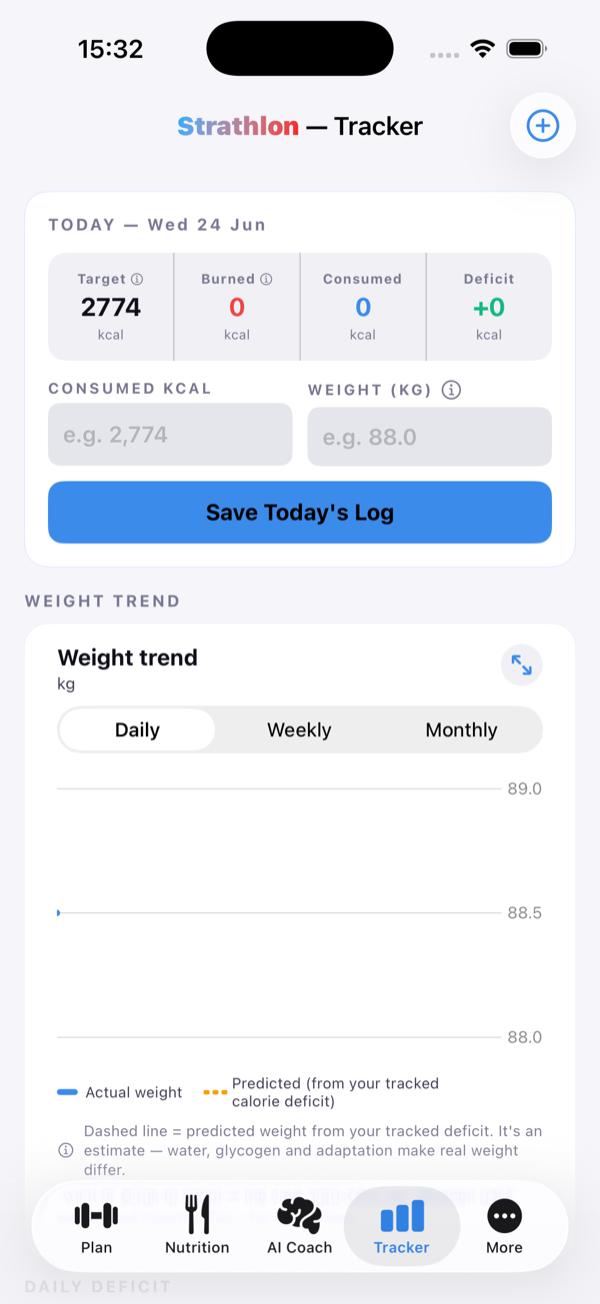
If you take one thing away, make it this: diet breaks and refeeds aren't a metabolic trick. They're a sustainability strategy. Their job is to help you keep a deficit going long enough to work, and to arrive at the end with more muscle and less misery. Strathlon's role is to keep maintenance an honest number and the weight trend easy to read, so a planned pause looks like exactly that (a pause) rather than a mystery on the scale.
References
Every figure in this guide comes from the sources below. Where a number reflects a professional body's consensus rather than a single trial, the citation names that body and the country it belongs to: guidance differs a little between nations, and no one country's advice is the last word. The trials themselves come from Australia, the United States, Norway and Switzerland, and they do not all agree; where they conflict, the guide says so rather than picking the flattering one.
- Aragon AA, Schoenfeld BJ, Wildman R, Kleiner S, VanDusseldorp T, Taylor L, Earnest CP, Arciero PJ, Wilborn C, Kalman DS, Stout JR, Willoughby DS, Campbell B, Arent SM, Bannock L, Smith-Ryan AE, Antonio J. International society of sports nutrition position stand: diets and body composition. Journal of the International Society of Sports Nutrition. 2017;14:16. Issued by the International Society of Sports Nutrition (ISSN), a United States-based professional society with international membership. PMC5470183
- Trexler ET, Smith-Ryan AE, Norton LE. Metabolic adaptation to weight loss: implications for the athlete. Journal of the International Society of Sports Nutrition. 2014;11:7. PMC3943438
- Byrne NM, Sainsbury A, King NA, Hills AP, Wood RE. Intermittent energy restriction improves weight loss efficiency in obese men: the MATADOR study. International Journal of Obesity. 2018;42(2):129–138. Conducted in Australia. PubMed 28925405
- Fothergill E, Guo J, Howard L, Kerns JC, Knuth ND, Brychta R, Chen KY, Skarulis MC, Walter M, Walter PJ, Hall KD. Persistent metabolic adaptation 6 years after “The Biggest Loser” competition. Obesity (Silver Spring). 2016;24(8):1612–1619. PMC4989512
- Peos JJ, Helms ER, Fournier PA, Ong J, Hall C, Krieger J, Sainsbury A. Continuous versus intermittent dieting for fat loss and fat-free mass retention in resistance-trained adults: the ICECAP trial. Medicine & Science in Sports & Exercise. 2021;53(8):1685–1698. PubMed 33587549
- Campbell BI, Aguilar D, Colenso-Semple LM, Hartke K, Fleming AR, Fox CD, Longstrom JM, Rogers GE, Mathas DB, Wong V, Ford S, Gorman J. Intermittent energy restriction attenuates the loss of fat free mass in resistance trained individuals. A randomized controlled trial. Journal of Functional Morphology and Kinesiology. 2020;5(1):19. PMC7739314
- Peos J, Brown AW, Vorland CJ, Allison DB, Sainsbury A. Contrary to the conclusions stated in the paper, only dry fat-free mass was different between groups upon reanalysis. Comment on: “Intermittent energy restriction attenuates the loss of fat-free mass in resistance trained individuals. A randomized controlled trial”. Journal of Functional Morphology and Kinesiology. 2020;5(4):85. PMC7739336
- Campbell BI. A reply to “contrary to the conclusions stated in the paper, only dry fat-free mass was different between groups upon reanalysis”, comment on: “Intermittent energy restriction attenuates the loss of fat-free mass in resistance trained individuals: a randomized controlled trial”. Journal of Functional Morphology and Kinesiology. 2020;5(4):86. PMC7739255
- Dirlewanger M, di Vetta V, Guenat E, Battilana P, Seematter G, Schneiter P, Jéquier E, Tappy L. Effects of short-term carbohydrate or fat overfeeding on energy expenditure and plasma leptin concentrations in healthy female subjects. International Journal of Obesity and Related Metabolic Disorders. 2000;24(11):1413–1418. Conducted in Switzerland. PubMed 11126336
- Peos JJ, Norton LE, Helms ER, Galpin AJ, Fournier P. Intermittent dieting: theoretical considerations for the athlete. Sports. 2019;7(1):22. PMC6359485
- Garthe I, Raastad T, Refsnes PE, Koivisto A, Sundgot-Borgen J. Effect of two different weight-loss rates on body composition and strength and power-related performance in elite athletes. International Journal of Sport Nutrition and Exercise Metabolism. 2011;21(2):97–104. Conducted at the Norwegian School of Sport Sciences (Norway). PubMed 21558571
- Peos JJ, Helms ER, Fournier PA, Krieger J, Sainsbury A. A 1-week diet break improves muscle endurance during an intermittent dieting regime in adult athletes: a pre-specified secondary analysis of the ICECAP trial. PLOS ONE. 2021;16(2):e0247292. PMC7906362
- Loucks AB, Thuma JR. Luteinizing hormone pulsatility is disrupted at a threshold of energy availability in regularly menstruating women. Journal of Clinical Endocrinology & Metabolism. 2003;88(1):297–311. PubMed 12519869
- Murray B, Rosenbloom C. Fundamentals of glycogen metabolism for coaches and athletes. Nutrition Reviews. 2018;76(4):243–259. PMC6019055
- Roberts BM, Helms ER, Trexler ET, Fitschen PJ. Nutritional recommendations for physique athletes. Journal of Human Kinetics. 2020;71:79–108. PMC7052702
This is general educational information rather than medical, dietary or coaching advice. The figures here are drawn from published research and are framed as population-level guides: individual needs vary widely with body size, training, sex, how lean you are and health status, and the evidence on diet breaks and refeeds is genuinely mixed. Anyone with a health condition, a history of disordered eating, or who is pregnant or postpartum should consult a qualified professional before changing how they eat or train. See our Terms for more.
← All guides · Fat-loss fundamentals · Maintenance nutrition · Eating for results · Home