
Fuelling & performance nutrition for rowing
An evidence-based guide to fuelling the rower's body. Rowing is a power-endurance sport: a six-to-eight-minute 2k that is brutally hard on the muscles' fast fuel, wrapped inside training weeks that can be enormous. That combination makes rowing one of the most carbohydrate-hungry sports there is. This covers daily carbohydrate for high volumes, protein for power output, fuelling the 2k and long rows, hydration, recovering between two-a-day sessions, and a careful, safety-first look at lightweight weight-making and the risk of under-fuelling.
Here's the short answer to "how should a rower fuel?": build a big carbohydrate base that moves with your training load, eat enough protein spread through the day to support power and repair, start every hard session and 2k with full glycogen, take in carbohydrate and fluid on rows longer than about an hour, and refuel and rehydrate hard between sessions, all while eating enough overall to avoid chronic under-fuelling. Everything below is the detail behind that sentence: the numbers, where they come from, and, for lightweight rowers especially, how to stay safe.
On this page
- Why rowing is a power-endurance, glycogen-hungry sport
- Daily carbohydrate: the base
- Protein for power and repair
- Before the 2k or a hard session
- During long rows and ergs: carbs per hour
- Hydration and sweat rate
- Recovery between two-a-day sessions
- Lightweight rowing: making weight safely
- Under-fuelling, energy availability and RED-S
- Common questions
- Takeaways
A framing note before the numbers. Sports nutrition is well studied, but people differ enormously: body size, training age, boat class, the weather, gut tolerance, sex and health status all shift what's right on the day. So this is written as can, tends to and around, never as a guarantee, and every specific figure is a population-level guide drawn from published consensus rather than a personal prescription. It's general education rather than medical or dietary advice, and it isn't a personalised plan, which matters even more than usual here, because the lightweight-rowing section touches on weight management, where doing it wrong can genuinely harm you.
Pair this with the rowing strength & conditioning guide, the other half of training the sport well, alongside the fuelling here.
Why rowing is a power-endurance, glycogen-hungry sport
Rowing sits in an unusual place. The classic test, the 2000 m, on water or on the erg, lasts only about six to eight minutes, yet every stroke is a near-maximal, whole-body push. Physiologists describe the 2k as predominantly aerobic (commonly put at around three-quarters of the energy, with reported values roughly in the 70–85% range) but with a large anaerobic contribution (roughly 15–30%) that most endurance events never touch. In plain terms: it's an endurance effort run at a strength athlete's intensity. That's why rowing is called a power-endurance sport, and why its main fuel is unambiguous: muscle glycogen, the stored form of carbohydrate that burns fast enough to keep up with hard, powerful work.
The catch is the same one every glycogen sport faces: those stores are small, and rowers spend them from two directions. The 2k and interval pieces burn glycogen fast because they're so intense. And the training that builds a rower (long steady-state rows, repeated ergs, weights, sometimes two or three sessions a day) burns a great deal of glycogen in total across a week. Elite programmes can push daily energy needs into a very wide band, with reported intakes for hard-training rowers ranging from roughly 2,600 up to 4,900 kilocalories a day, and higher still in the biggest blocks. Fuelling rowing well is therefore about keeping a large tank topped up day after day. One well-judged race meal won't do it on its own.
Daily carbohydrate: the base
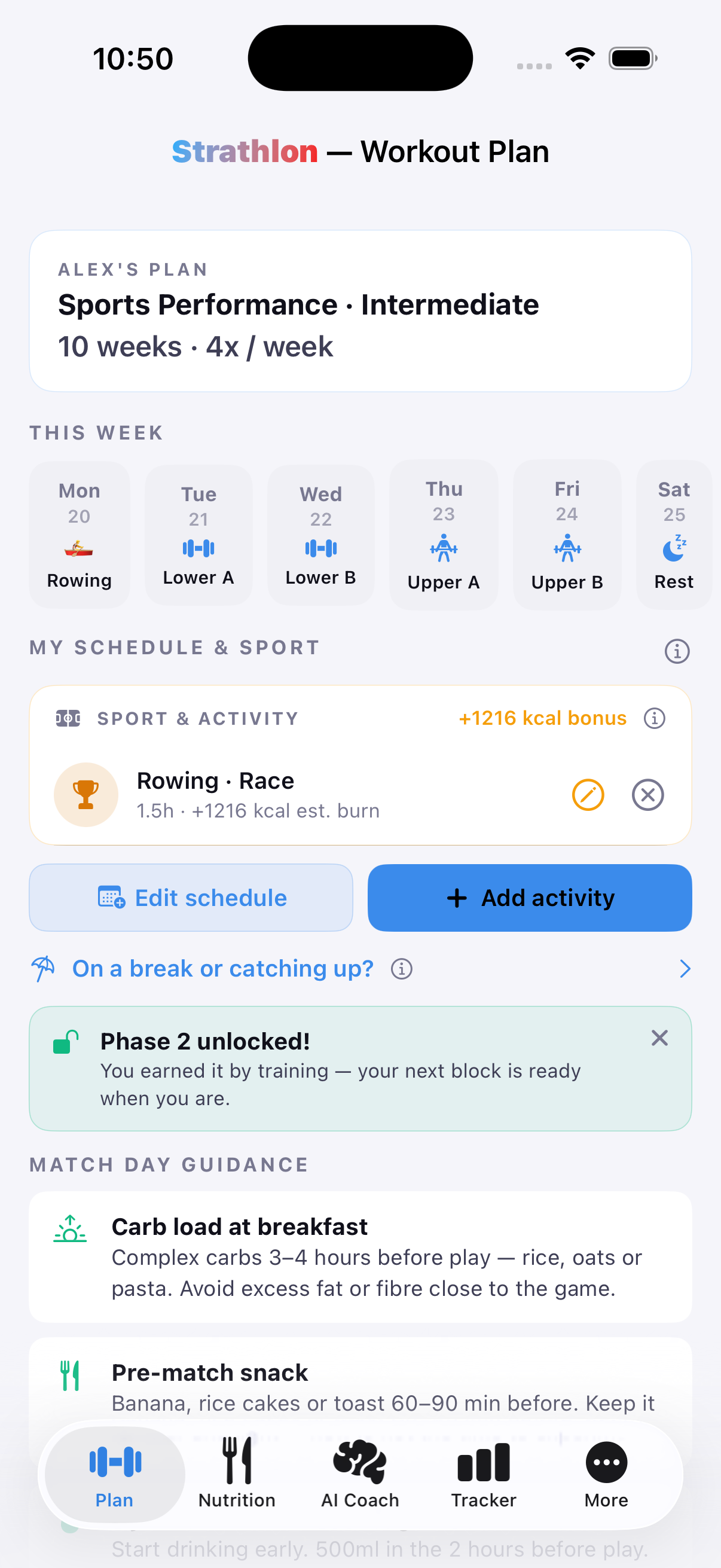
Because glycogen limits both the 2k and repeated hard training, a rower's most important nutrition habit is simply eating enough carbohydrate, matched to the day's training. Sports-nutrition guidance (including rowing-specific reviews and the position stands of bodies like the International Society of Sports Nutrition and the joint stand from the Academy of Nutrition and Dietetics, Dietitians of Canada and the American College of Sports Medicine) describes carbohydrate targets that scale with load:
- Light, skill or rest days: around 3–5 g of carbohydrate per kilogram of body weight per day.
- Moderate-to-high training, roughly 1–3 hours a day: about 6–10 g/kg/day.
- Very high volumes (heavy blocks, long days, two-a-day training): up to 8–12 g/kg/day.
- References
The practical point is that these dials should move with your week. A double-session day or a long water outing warrants far more carbohydrate than a rest day. The most common way club and student rowers end up flat and under-recovered is eating at the low end while training at the high end: the base is too empty for the quality work on top to stick. Chronically under-carbing a rowing programme doesn't just cost you a session. It slowly digs a hole.
Protein for power and repair
Rowing is as much a strength sport as an endurance one, and the muscle it loads (legs, back, trunk) needs protein to repair and adapt. Endurance-and-strength athletes like rowers are generally advised to eat more protein than a sedentary person: a common guide is roughly 1.4–2.0 g of protein per kilogram of body weight per day, spread across the day rather than piled into one meal.
"Spread" is doing real work in that sentence. Muscle repair responds best to regular protein feedings, so guidance describes a dose of around 0.3–0.4 g/kg (about 20–40 g) of a high-quality protein source every three to four hours, including soon after training. A slower-digesting protein such as casein (~40 g) before sleep can support overnight repair, useful for rowers grinding through big weeks. None of this is exotic: it mostly means putting a real protein source in each main meal and in your recovery snack rather than chasing powders.
Before the 2k or a hard session
Since the 2k is too short to fuel mid-piece, it's fuelled by what you ate before. The goal of the pre-session meal is simple: arrive with liver and muscle glycogen high and a stomach that won't fight you. Position stands describe a carbohydrate-focused meal or snack of roughly 1–4 g of carbohydrate per kilogram of body weight, eaten around one to four hours beforehand, the larger amounts earlier when you have time to digest, the smaller amounts closer to the start. A lighter top-up in the 30–60 minutes before you get on can help too.
Grams you can calculate. Tolerance you have to learn. Favour familiar, lower-fibre and lower-fat carbohydrate you've rehearsed (porridge, toast, a banana, a bagel, rice) because fibre and fat slow digestion and can sit heavily in a boat or on an erg. The golden rule of race morning is to try nothing new: the meal, the coffee, the timing should all be things your gut has already met in training. This matters doubly at regattas, where nerves and long waits between heats and finals can wreck a stomach that wasn't rehearsed.
During long rows and ergs: carbs per hour
Racing rarely needs mid-effort fuelling: even a 5k or a head-race piece is over quickly. It's long training where in-session carbohydrate earns its keep: steady-state rows, back-to-back ergs, and endurance blocks that run past roughly an hour to ninety minutes. Beyond that point, taking in carbohydrate helps maintain blood glucose and spares glycogen, delaying fatigue.
| Session | Carbohydrate per hour | Practical form | Why |
|---|---|---|---|
| 2k / short hard pieces (< ~1 h) | Little or none | Mouth rinse optional | Too short to fuel. Your stored glycogen covers it. A carbohydrate mouth rinse can help hard efforts. |
| Steady rows ~1–2.5 h | ~30–60 g | 6–8% drink, gel or chews | Maintains blood glucose, well within what a single carbohydrate source can be absorbed. |
| Very long efforts (> ~2.5 h) | Up to ~90 g | Glucose + fructose mix | To absorb this much you need multiple transportable carbohydrates together. |
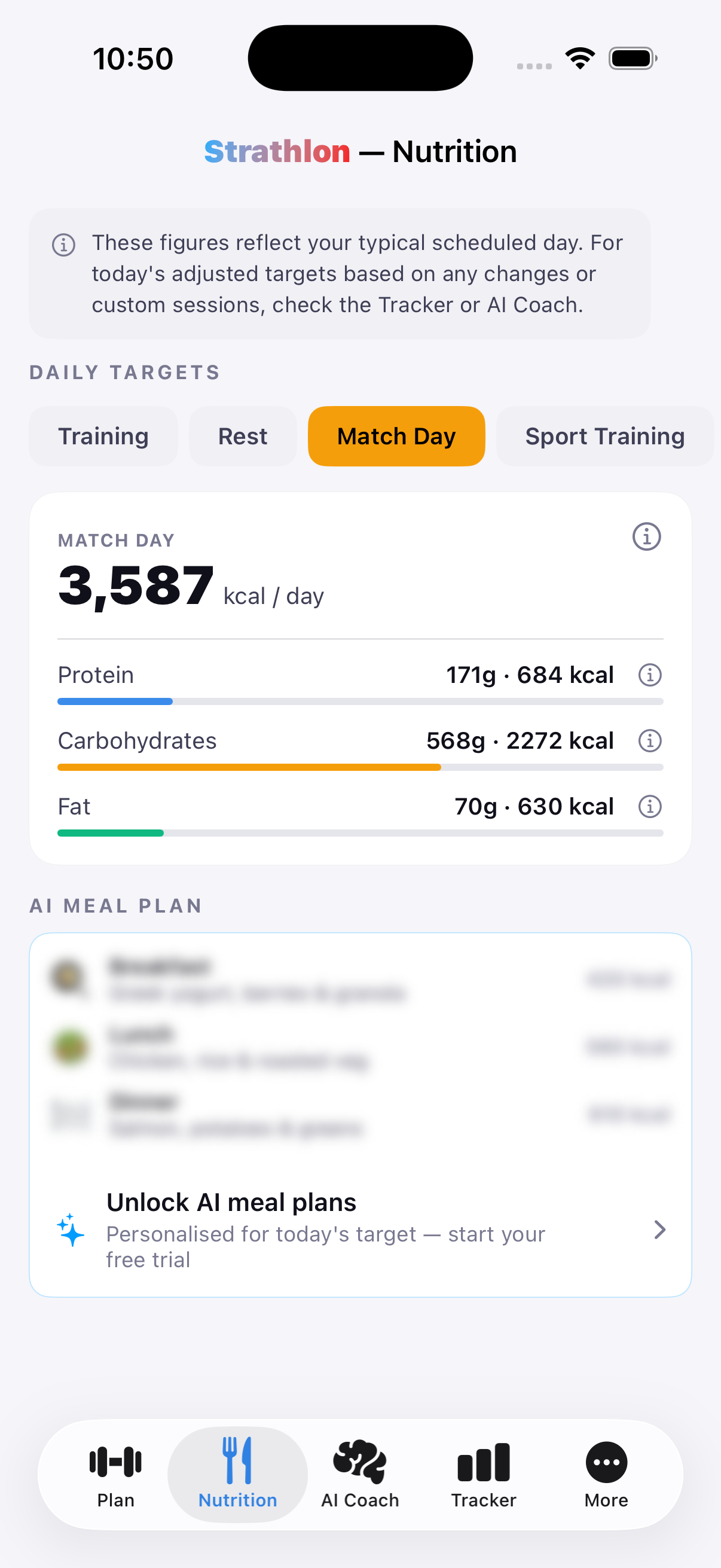
For most rowers, the workhorse number is around 30–60 g of carbohydrate per hour on longer sessions, conveniently delivered by a 6–8% carbohydrate-electrolyte drink sipped every 10–15 minutes (which hydrates and fuels at once), or by gels and chews if you prefer to count the grams that way. For short but very hard pieces under an hour, you usually don't need to swallow much at all. Even a carbohydrate mouth rinse (swilling a carbohydrate drink for a few seconds and spitting it out) can nudge performance on high-intensity work. Only genuinely long efforts approach the top of the ladder, and getting much above roughly 60 g an hour requires a glucose-plus-fructose mix, because those two sugars use different gut transporters and combining them lets you absorb carbohydrate faster than glucose alone, which tends to max out near 60 g/h.
Hydration and sweat rate
Rowing generates a lot of heat, and the erg is notorious for it: indoors, with no breeze and no water rushing past, sweat rates can be very high. Losing more than roughly 2% of body mass as sweat is associated with rising effort and, in the heat, falling performance, so the sensible aim on long sessions is to keep body-mass loss under about 2% rather than drinking to a rigid schedule.
There's no universal millilitres-per-hour figure, because sweat rates vary enormously between people and with heat, humidity and intensity. The reliable way to find your own number is to weigh yourself before and after a hard session in representative conditions: each kilogram lost is roughly a litre of sweat, which tells you how much you're under-replacing and what to aim for next time. On sessions past about an hour, and especially on the erg in summer, replacing some sodium alongside fluid helps you hold onto what you drink. And, handily, the same 6–8% sports drinks that carry carbohydrate usually carry sodium too.
Recovery between two-a-day sessions
Rowing's training culture is built on volume, and that often means two or even three sessions a day. When the next hard session is only hours away, recovery speed becomes the whole game: you're trying to refill glycogen and start repair before you have to do it all again.
- Refuel fast when the turnaround is short. Research on rapid recovery describes taking in carbohydrate at around 1.0–1.2 g per kilogram of body weight per hour in the first few hours after a session, favouring higher-glycaemic sources, to restock glycogen as quickly as possible, because the muscle is most receptive soon after you stop.
- Add protein for repair. Roughly 0.3–0.4 g/kg (about 20–40 g) alongside the carbohydrate supports muscle repair, and helps glycogen refilling most when you can't get enough carbohydrate in on its own.
- Rehydrate deliberately. To fully replace sweat losses you need to drink about 1.5 times the fluid you lost (each kilogram down ≈ a litre), with sodium, because some of what you drink is lost as urine before the next session.
If, on the other hand, you have a full day or more before the next tough session, none of this urgency applies: simply hitting your normal daily carbohydrate and protein targets across ordinary meals will refill stores comfortably in time. The eating-for-results guide covers the broader nutrition picture in depth.
Lightweight rowing: making weight safely
Lightweight rowing adds a variable no other endurance sport handles the same way: a weigh-in. Athletes must come in under a category limit, and the weigh-in typically happens only about one to two hours before racing, which leaves very little time to rehydrate and refuel before you're on the start line. That short window is exactly why weight-making has to be approached carefully.
The evidence-based principle is gradual, planned reduction, never a crash. Reaching your category through a modest, steady reduction over weeks (while still eating enough carbohydrate and protein to train and recover) is far safer and better for performance than the last-ditch tactics rowers sometimes resort to: aggressive dehydration (heavy sweating, saunas, fluid restriction), skipping meals, or crash dieting in the final days. Reviews of rowing nutrition suggest keeping any acute weight loss in the 24 hours before a weigh-in small, on the order of about a kilogram or less, and treating that as a ceiling rather than a target. Losing several kilos of water in a day, then trying to race a maximal 2k off it a couple of hours later, tends to leave you weaker without making you meaningfully lighter.
There's a hard safety line to name plainly here. Extreme dehydration to make weight is dangerous, and it's a poor performance trade even setting the health risks aside, because you can't fully rehydrate in the one-to-two-hour gap before racing. And repeatedly under-eating to hold a low weight is one of the fastest routes into low energy availability and RED-S (next section), which lightweight rowers, women especially, are at elevated risk of.
Under-fuelling, energy availability and RED-S
The most serious nutrition mistake in rowing isn't a bad drink choice: it's chronically eating too little to support the training, and rowing has two features that make it common: the sheer energy cost of big weeks, and, in the lightweight ranks, pressure to hold a low body weight. Both can tip an athlete into low energy availability: not leaving enough energy, after training is paid for, to run the body's basic functions.
Sports scientists quantify this as energy availability: roughly, energy eaten minus energy burned in exercise, expressed per kilogram of fat-free (lean) mass. Research associates falling below about 30 kcal per kilogram of fat-free mass per day with a cascade of problems, while something nearer 45 kcal/kg of fat-free mass per day is considered healthy for a training body. Sustained low energy availability is the root cause of what the International Olympic Committee calls Relative Energy Deficiency in Sport (RED-S): a syndrome, affecting both men and women, that can impair bone health, hormones and menstrual function, immunity, metabolism, mood and (the irony every rower should note) performance itself. Studies of lightweight rowers describe exactly this risk, driven by weight-making.
The warning signs are worth knowing: nagging or recurrent stress fractures (including rib stress injuries, which rowers are already prone to), frequent illness, stalled or declining performance despite hard training, poor sleep, low mood, and (in women) disrupted or absent periods. None of these are things to push through. If they appear, the answer is usually to eat more rather than train harder, and to seek help from a sports physician or registered dietitian. Fuelling isn't only about race day: under- fuelling day after day is the fast route to injury, illness and burnout.
Common questions
How much carbohydrate should a rower eat each day?
It should track your training load rather than being a fixed number. Rowing-specific and general sports-nutrition guidance describes roughly 3–5 g of carbohydrate per kilogram of body weight on light, skill or rest days; around 6–10 g/kg/day when you're training one to three hours; and up to about 8–12 g/kg/day in the biggest weeks, such as heavy two-a-day blocks. The idea is to move the dial with your week: a hard erg or long-water day earns more carbohydrate than an easy day, because glycogen is the fuel that limits both the 2k and repeated hard sessions.
What should I eat before a 2k or a hard erg session?
Aim to start with full glycogen and a settled stomach. Position stands describe a carbohydrate-focused meal or snack of roughly 1–4 g per kilogram of body weight, eaten around one to four hours beforehand, larger and earlier when you have time to digest, smaller and closer to the start if you don't. Favour familiar, lower-fibre, lower-fat carbohydrate you've rehearsed in training, such as porridge, toast, rice or a banana, and a smaller top-up in the 30–60 minutes before you get on. The 2k itself is short (about six to eight minutes), too short to fuel mid-piece, so it runs on what you ate in the hours before.
How do I fuel long steady-state rows and ergs?
Once a session runs beyond about an hour to ninety minutes, taking in carbohydrate helps maintain blood glucose and spares glycogen. A common guide is around 30–60 g of carbohydrate per hour, typically from a 6–8% carbohydrate-electrolyte drink sipped every 10–15 minutes, or from gels or chews if you prefer. For short but very hard pieces under an hour you usually don't need to swallow much: even a carbohydrate mouth rinse can help. Only the longest efforts approach the top of the range, and higher intakes (toward 90 g/h) need a glucose-plus-fructose mix to be absorbed.
How should I recover between two sessions in the same day?
When the next hard session is only hours away, refuelling speed matters. Research on rapid recovery describes taking in carbohydrate at around 1.0–1.2 g per kilogram of body weight per hour in the first few hours, favouring higher-glycaemic sources, to refill glycogen quickly, plus some protein (roughly 0.3–0.4 g/kg, about 20–40 g) to support repair. Rehydrate by replacing around 1.5 times the fluid you lost, with sodium, to account for ongoing sweat and urine losses. If you have a full day before the next tough session, there's no need to rush. Normal meals will refill stores in time.
How can lightweight rowers make weight safely?
The safest approach is gradual and planned, never a last-minute crash. Reaching your category through a modest, steady reduction over weeks (while still eating enough to train) is far better than aggressive dehydration or starvation in the final days, which harms performance and health. Reviews suggest any acute weight loss in the 24 hours before a weigh-in should be kept small (on the order of about a kilogram or less), and extreme sweating or fluid restriction to make weight is discouraged. Because weigh-in is typically only one to two hours before racing, there's very little time to rehydrate and refuel. Weight-making is a medical and coaching decision: work it out together with a sports dietitian or physician.
Can rowing put me at risk of RED-S or under-fuelling?
Yes, and it's worth taking seriously, especially in lightweight rowing, where making weight can push athletes to eat too little. Chronically failing to leave enough energy after training is called low energy availability. Research associates falling below about 30 kcal per kilogram of fat-free mass per day with a cascade of problems. Sustained low energy availability underlies Relative Energy Deficiency in Sport (RED-S), which affects both men and women and can harm bone, hormones, immunity, mood and performance. Warning signs include stress fractures, missing periods, frequent illness and stalled results despite hard training. The answer is usually to eat more rather than train harder, and to seek professional help.
Takeaways
- Rowing is power-endurance. The 2k is a six-to-eight-minute, mostly-aerobic effort at strength-athlete intensity, fuelled by muscle glycogen, so fuelling is about starting full and refilling all week.
- Build a big carbohydrate base. Match it to training: roughly 3–5 g/kg on light days, 6–10 g/kg for one to three hours, up to 8–12 g/kg/day in heavy or two-a-day blocks.
- Eat enough protein, spread out. Around 1.4–2.0 g/kg/day, in doses of about 0.3–0.4 g/kg (20–40 g) every three to four hours, to support power and repair.
- Fuel the 2k beforehand. The piece itself is too short to fuel mid-race. A familiar, carb-focused meal of about 1–4 g/kg, one to four hours out, plus a small top-up, and nothing new on race day.
- Fuel long rows by the hour. ~30–60 g of carbs per hour on sessions past an hour, often as a 6–8% drink. A mouth rinse can help short hard pieces.
- Hydrate to your own sweat rate. Aim to keep body-mass loss under ~2%. Weigh before and after to learn your number, and don't over-drink.
- Recover hard between sessions. When the turnaround is short, ~1.0–1.2 g/kg/h of carbs plus ~0.3–0.4 g/kg protein, and rehydrate to ~1.5× fluid lost.
- Make weight gradually, if at all. Lightweight rowers should reduce slowly over weeks, keep any acute cut small (~1 kg or less in 24 h), avoid extreme dehydration, and plan it with a professional.
- Eat enough, always. Chronic under-fuelling (low energy availability, RED-S) harms bone, hormones, health and performance. When in doubt, eat more.
If you remember one thing, make it this: the rowers who fuel well are the ones who show up to every session with a full tank, refill between sessions, and eat enough overall to keep training, far more than the ones with the fanciest supplements. Strathlon's job is to keep that base honest by adjusting your targets around the rows and ergs you actually log, so the everyday fuelling that underpins every 2k is one less thing to guess at.
References
Numbered sources for the specific figures, effect sizes and named studies above. Where a claim reflects agreed guidance rather than a single trial, the citation is to the position stand or consensus statement of the body concerned, with the country or international remit named. Rowing has little sport-specific nutrition research; the demands below are rowing-specific and the fuelling prescriptions come from the endurance-sport literature, which is said where it applies.
- Benson A, Abendroth J, King D, Swensen T. Comparison of rowing on a concept 2 stationary and dynamic ergometer. Journal of Sports Science & Medicine. 2011;10(2):267–73. Comparison of rowing on stationary and dynamic ergometers, the source for the training demand this guide fuels for. PubMed 24149871 · PMC3761858 full text
- Baumann E, van der Vorst EMC, Hofmijster MJ. A speed-oriented phenotype is beneficial for 1500 m rowing at the Los Angeles 2028 Olympic Games. European Journal of Applied Physiology. 2026. Study of the physiological phenotype favoured at the shorter Olympic rowing distance, cited for how the event shapes the fuelling. PubMed 42142183
- Jeukendrup AE. Nutrition for endurance sports: marathon, triathlon, and road cycling. Journal of Sports Sciences. 2011;29 Suppl 1:S91–9. Review of nutrition for endurance sports, the general endurance framework applied here. PubMed 21916794
- Vitale K, Getzin A. Nutrition and Supplement Update for the Endurance Athlete: Review and Recommendations. Nutrients. 2019;11(6). Nutrition and supplement review and recommendations for the endurance athlete, the second source for the same. PubMed 31181616 · PMC6628334 full text
- Witard OC, Hearris M, Morgan PT. Protein Nutrition for Endurance Athletes: A Metabolic Focus on Promoting Recovery and Training Adaptation. Sports Medicine. 2025;55(6):1361–1376. Review of protein nutrition for endurance athletes with a focus on recovery and training adaptation, the protein case for a high-volume sport. PubMed 40117058 · PMC12152099 full text
- Gallant TL, Ong LF, Wong L, Sparks M, Wilson E, Puglisi JL, et al. Low Energy Availability and Relative Energy Deficiency in Sport: A Systematic Review and Meta-analysis. Sports Medicine. 2025;55(2):325–339. Systematic review and meta-analysis of low energy availability and Relative Energy Deficiency in Sport, the source for the under-fuelling risk in a high-volume, weight-conscious sport. PubMed 39485653
- Burke LM, Slater GJ, Matthews JJ, Langan-Evans C, Horswill CA. ACSM Expert Consensus Statement on Weight Loss in Weight-Category Sports. Current Sports Medicine Reports. 2021;20(4):199–217. ACSM expert consensus statement on weight loss in weight-category sports, cited for lightweight rowing specifically. PubMed 33790193
- Logue DM, Madigan SM, Melin A, Delahunt E, Heinen M, Donnell SM, et al. Low Energy Availability in Athletes 2020: An Updated Narrative Review of Prevalence, Risk, Within-Day Energy Balance, Knowledge, and Impact on Sports Performance. Nutrients. 2020;12(3). Updated narrative review of low energy availability in athletes covering prevalence, risk and within-day energy balance. PubMed 32245088 · PMC7146210 full text
- Thomas DT, Erdman KA, Burke LM. Position of the Academy of Nutrition and Dietetics, Dietitians of Canada, and the American College of Sports Medicine: Nutrition and Athletic Performance. Journal of the Academy of Nutrition and Dietetics. 2016;116(3):501–528. Joint position of the Academy of Nutrition and Dietetics, Dietitians of Canada and the American College of Sports Medicine, the umbrella source for the daily energy, carbohydrate and protein ranges used throughout. PubMed 26920240
- Burke LM, Hawley JA, Wong SH, Jeukendrup AE. Carbohydrates for training and competition. Journal of Sports Sciences. 2011;29 Suppl 1:S17–27. Burke and colleagues on carbohydrate for training and competition, the source for the g/kg/day carbohydrate targets matched to training load. PubMed 21660838
- Jeukendrup A. A step towards personalized sports nutrition: carbohydrate intake during exercise. Sports Medicine. 2014;44 Suppl 1(Suppl 1):S25–33. Jeukendrup on personalising carbohydrate intake during exercise, the source for the g/h feeding rates and the duration at which they start to matter. PubMed 24791914 · PMC4008807 full text
- Jäger R, Kerksick CM, Campbell BI, Cribb PJ, Wells SD, Skwiat TM, et al. International Society of Sports Nutrition Position Stand: protein and exercise. Journal of the International Society of Sports Nutrition. 2017;14:20. International Society of Sports Nutrition (ISSN, United States) position stand on protein and exercise, the source for the daily protein range and per-meal distribution. PubMed 28642676 · PMC5477153 full text
- Schoenfeld BJ, Aragon AA. How much protein can the body use in a single meal for muscle-building? Implications for daily protein distribution. Journal of the International Society of Sports Nutrition. 2018;15:10. Schoenfeld and Aragon on how much protein the body can use in a single meal, the basis for the per-feed figure quoted. PubMed 29497353 · PMC5828430 full text
- Burke LM, van Loon LJC, Hawley JA. Postexercise muscle glycogen resynthesis in humans. Journal of Applied Physiology. 2017;122(5):1055–1067. Review of post-exercise muscle glycogen resynthesis, the source for the refuelling rates and for when a fast refuel is actually needed. PubMed 27789774
- Sawka MN, Burke LM, Eichner ER, Maughan RJ, Montain SJ, Stachenfeld NS. American College of Sports Medicine position stand. Exercise and fluid replacement. Medicine and Science in Sports and Exercise. 2007;39(2):377–90. ACSM position stand on exercise and fluid replacement, the source for the under-2% body-mass-loss guideline and the sweat-rate method. PubMed 17277604
- Barnes KA, Anderson ML, Stofan JR, Dalrymple KJ, Reimel AJ, Roberts TJ, et al. Normative data for sweating rate, sweat sodium concentration, and sweat sodium loss in athletes: An update and analysis by sport. Journal of Sports Sciences. 2019;37(20):2356–2366. Normative data for sweating rate and sweat sodium concentration in athletes, the source for how widely fluid and sodium losses vary between individuals. PubMed 31230518
- Hew-Butler T, Rosner MH, Fowkes-Godek S, Dugas JP, Hoffman MD, Lewis DP, et al. Statement of the Third International Exercise-Associated Hyponatremia Consensus Development Conference, Carlsbad, California, 2015. Clinical Journal of Sport Medicine : Official Journal of the Canadian Academy of Sport Medicine. 2015;25(4):303–20. Third International Exercise-Associated Hyponatremia Consensus statement, the basis for the warning against drinking well beyond sweat losses. PubMed 26102445
- Guest NS, VanDusseldorp TA, Nelson MT, Grgic J, Schoenfeld BJ, Jenkins NDM, et al. International society of sports nutrition position stand: caffeine and exercise performance. Journal of the International Society of Sports Nutrition. 2021;18(1):1. ISSN position stand on caffeine and exercise performance, the source for the caffeine dose and timing guidance. PubMed 33388079 · PMC7777221 full text
- Kreider RB, Kalman DS, Antonio J, Ziegenfuss TN, Wildman R, Collins R, et al. International Society of Sports Nutrition position stand: safety and efficacy of creatine supplementation in exercise, sport, and medicine. Journal of the International Society of Sports Nutrition. 2017;14:18. ISSN position stand on the safety and efficacy of creatine supplementation, cited where creatine is relevant to the sport's demands. PubMed 28615996 · PMC5469049 full text
- Maughan RJ, Burke LM, Dvorak J, Larson-Meyer DE, Peeling P, Phillips SM, et al. IOC consensus statement: dietary supplements and the high-performance athlete. British Journal of Sports Medicine. 2018;52(7):439–455. IOC consensus statement on dietary supplements and the high-performance athlete, the framing for treating supplements as optional extras. PubMed 29540367 · PMC5867441 full text
- Mountjoy M, Ackerman KE, Bailey DM, Burke LM, Constantini N, Hackney AC, et al. 2023 International Olympic Committee's (IOC) consensus statement on Relative Energy Deficiency in Sport (REDs). British Journal of Sports Medicine. 2023;57(17):1073–1097. The 2023 IOC consensus statement on Relative Energy Deficiency in Sport, the source for the consequences of under-fuelling a training load. PubMed 37752011
- Aragon AA, Schoenfeld BJ. Nutrient timing revisited: is there a post-exercise anabolic window?. Journal of the International Society of Sports Nutrition. 2013;10(1):5. Aragon and Schoenfeld on the post-exercise anabolic window, the source for timing mattering far less than daily totals. PubMed 23360586 · PMC3577439 full text
- British Dietetic Association (BDA, United Kingdom). Sport and exercise nutrition: Food Fact Sheet. British Dietetic Association (BDA, United Kingdom) Food Fact Sheet on sport and exercise nutrition, the practical UK dietetic framing. BDA Food Fact Sheet
This is general educational information rather than medical, dietary or coaching advice. The sports-nutrition figures here are drawn from established consensus and are framed as population-level guides; individual needs vary widely with body size, boat class, conditions, gut tolerance and health, and are best personalised with a qualified professional. Weight-making and weight-category decisions in lightweight rowing carry real health risks and should always be planned with a sports physician or registered dietitian. Anyone with a health condition, a history of disordered eating, or who is pregnant or postpartum, or who suspects under-fuelling, stress fractures, menstrual disruption or RED-S, should consult a sports physician or registered dietitian before making changes. See our Terms for more.
← All guides · Rowing strength & conditioning · Eating for results · Understanding your stats · Home